
How Christianity First Reached Africa: Pre-Colonial Missions and African Responses
How Christianity First Reached Africa: Pre-Colonial Missions and African Responses
Christianity’s presence in Africa did not begin with European colonial expansion, nor did missionary activity arrive as a sudden external force imposed upon passive societies. Long before the rise of European imperial power, Christian institutions, intellectual traditions, and religious networks had already taken root across parts of the continent, particularly in North Africa and the Horn. These early developments formed the foundation upon which later encounters would unfold, establishing Africa not as a recipient of Christianity, but as one of its earliest centers of growth, interpretation, and institutional formation.
Across these early centuries, the spread of Christianity into Africa unfolded gradually, carried through trade, political contact, and institutional development long before the arrival of European missions. By the time Western European missionaries began reaching sub‑Saharan Africa in the late fifteenth century, they encountered societies that were neither unfamiliar with organized religion nor passive in their engagement. Instead, African rulers and communities approached Christianity through deliberate political, economic, and intellectual calculation, shaping its reception through negotiation, adaptation, restriction, and at times outright rejection.
These early encounters did not simply mark the introduction of a new faith; they established the boundaries within which missionary influence could operate and set the conditions that would later define the character and direction of missionary expansion across the continent.
1. First Encounters: Christianity Reaches Africa
The earliest identifiable missionary presence of Christianity on the African continent can be traced all the way back to the first century A.D. through Egypt, particularly in the city of Alexandria. According to early Christian literature, one of the earliest Christian churches in Egypt was established in the city of Alexandria in the mid‑first century A.D., and this foundation is commonly attributed to John Mark.[1] John, who came to be known as Mark the Evangelist, was a Jewish Christian from Jerusalem and an associate of both Paul and Peter during the earliest decades of the Christian movement. Early Christian sources also identify him as the author traditionally associated with the Gospel of Mark in the New Testament.[2]
Mark the Evangelist laid the institutional foundations of what later became the Alexandrian Church. It is noted by church historians that by the second century Alexandria had already developed into one of the principal intellectual and missionary centers of early Christianity, from which Christian teachings spread throughout parts of Roman North Africa.[3]
A second important early missionary development occurred in the fourth century in the Kingdom of Aksum in the Ethiopian highlands of what is present‑day northern Ethiopia and Eritrea. According to early ecclesiastical accounts recorded by Rufinus of Aquileia, Frumentius, a young Christian from the eastern Mediterranean, reached the region after a ship carrying him and his companions was attacked along the Red Sea coast.[4] The survivors were taken to the court of the Aksumite king, where Frumentius and his companion Aedesius gained the trust of the royal household and were eventually appointed to positions within the administration.
Through this position, Frumentius encouraged the small community of Christian merchants already present in the kingdom. Many of these merchants were traders from the eastern Mediterranean travelling along the commercial routes linking the Roman territories with the ports of the Red Sea and the Horn of Africa.[5] Frumentius gradually used these connections to introduce Christian teachings at the royal court. After later travelling to Alexandria, he was consecrated as bishop of Aksum by Athanasius of Alexandria, one of the most influential bishops of the early church and a leading defender of Nicene Christianity.[6] When Frumentius returned to Aksum, his influence contributed to the conversion of King Ezana and the eventual adoption of Christianity as the state religion of the kingdom.[7] The formal adoption of Christianity in the Aksumite kingdom transformed what had begun as an individual missionary effort into the earliest organized ecclesiastical institution in northeastern Africa.[8]
Following the establishment of early Christian communities in Alexandria and the later missionary developments in Aksum, Christianity continued to grow across parts of North Africa during the first centuries A.D. Within the wider religious landscape of the Roman Empire, vibrant Christian communities emerged in major urban centers such as Alexandria in Egypt, Carthage in present-day Tunisia, and Cyrene in present-day eastern Libya.[9] These centers later produced influential theologians including Origen and Augustine of Hippo, whose writings would shape Christian doctrine for centuries.[10]
Origen (c. 185–253) led the Catechetical School of Alexandria and went on to become one of the most important early Christian scholars, producing extensive writings on theology and biblical interpretation that influenced Christian doctrine for centuries.[11] Augustine (354–430), bishop of Hippo Regius in Roman North Africa (present‑day Annaba, Algeria), authored foundational works such as Confessions and The City of God, which articulated key doctrines on grace, sin, and the relationship between church and state.[12] It is observed that Augustine’s career demonstrates how deeply Christianity had become integrated into the political and cultural life in the late Roman North Africa by the late fourth and early fifth centuries.[13]
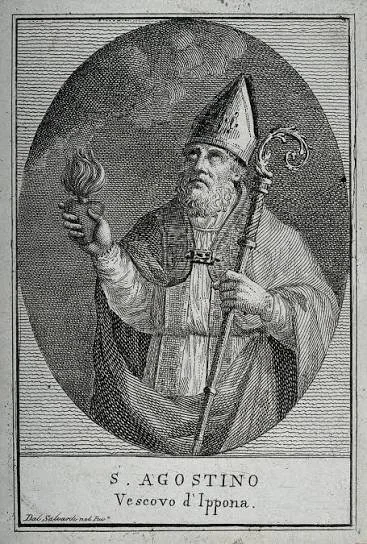
A fresco or icon of St. Augustine of Hippo, highlighting his North African origin. Source: Wikimedia Commons.
While the urban Christian centers of Alexandria, Carthage, and Cyrene produced influential theologians and institutional church leadership, a different form of Christian life began to develop within Egypt itself.[14] In contrast to the scholarly and ecclesiastical traditions associated with the Alexandrian Church, new forms of Christian spirituality emerged from the Egyptian desert.^[15] Ascetics such as Anthony the Great (c. 251–356) withdrew from urban life to pursue spiritual discipline in the wilderness, emphasizing solitude, prayer, and personal ascetic practice rather than participation in the structured life of the city churches.[16]
The monastic traditions that developed from these communities later spread widely across the Christian world.[17] Early accounts describe the Egyptian desert as becoming "a city" of monks, filled with communities devoted to prayer and spiritual discipline.[18] This monastic movement introduced a new model of religious life centered on withdrawal from society and the pursuit of holiness through ascetic discipline, which significantly shaped later Christian spirituality.[19] These developments demonstrate how early African Christianity produced diverse expressions of faith, ranging from the intellectual and institutional traditions of Alexandria to the ascetic monastic movements that emerged from the deserts of Egypt.
Taken together, the developments already described in Alexandria, Aksum, and the wider North African cities demonstrate that organized Christian missionary activity had reached parts of Africa many centuries before the rise of European colonial expansion. By the early centuries of the Christian era, churches, theological institutions, and missionary networks were already operating across the Mediterranean and Red Sea worlds, linking Egypt, the Horn of Africa, and Roman North Africa. Thus, Christianity entered Africa through these early religious movements and commercial routes long before it became associated with the later political ambitions of European imperial powers.
2. Arrival of European Missionaries
2.1 The First European Missions
These earlier developments across Alexandria, Aksum, and the wider North African world demonstrate that organized Christian institutions; churches, theological schools, and missionary networks were already active in some parts of Africa during the early centuries, long before the rise of European expansion. Yet contact between these earlier African Christian traditions and Western European Christianity remained very limited for many centuries. It was not until the late fifteenth century, during the period of Portuguese maritime exploration along the Atlantic coast of Africa, that the first organized missions from Western Europe began to reach sub‑Saharan Africa.[20]
These early missions emerged within the broader context of Portuguese navigation and exploration sponsored by the Portuguese crown. The expeditions were not directed toward Africa alone but formed part of a wider effort to expand maritime trade routes, establish diplomatic alliances, and locate Christian partners across the Atlantic and Indian Ocean worlds.[21] During the fifteenth century Portuguese expeditions gradually advanced down the western coast of Africa in search of new commercial routes, political alliances, and opportunities for Christian expansion.
These maritime ventures operated under the direct patronage of the Portuguese crown and were reinforced by papal authorization, which granted the monarchy the spiritual mandate to evangelize newly encountered territories and thereby linking the spread of Christianity to the broader program of Portuguese overseas expansion.[22] As historians of Iberian expansion have observed, the Portuguese crown viewed overseas exploration partly as a continuation of the religious aspirations that had grown out of the earlier Iberian Reconquista, a centuries‑long series of campaigns through which Christian kingdoms in the Iberian Peninsula (present‑day Spain and Portugal) gradually expelled Muslim political rule and reasserted Christian authority across the region. The ideological momentum of this struggle helped frame later Portuguese voyages as both commercial enterprises and religious missions aimed at extending Christianity beyond Europe.[23]
One of the earliest sustained Portuguese missionary encounters occurred in the Kingdom of Kongo in Central Africa. This was after Portuguese explorer Diogo Cão reached the mouth of the Congo River in the early 1480s and established diplomatic contact with the Kongolese court.[24] His contact with the Kongolese court was immediately followed by the arrival of missionaries and priests from Portugal who came accompanying Portuguese envoys seeking both political alliance and religious conversion of the Kongo natives. This early exchange made the Kongolese court the first major point of encounter between European missionaries and sub‑Saharan African societies.[25]
Within this expanding relationship between the Portuguese envoys, missionaries, and the Kongolese court, a decisive development occurred in 1491 with King Nzinga a Nkuwu of Kongo accepting to be baptized and adopting the Christian name João I.[26] This event marked the first recorded conversion of a sub‑Saharan African monarch through direct contact with European missionaries.[27] The conversion was not merely a personal religious act but a diplomatic gesture that signaled the beginning of an enduring relationship between the Kongolese monarchy and the Portuguese crown. Christianity therefore entered the political life of the kingdom through royal patronage and diplomatic exchange rather than through mass missionary evangelization among the general population.
The most significant development of this early missionary encounter occurred during the reign of João’s son, Afonso I (r. 1506–1543). Afonso became a committed supporter of Christianity and actively promoted the establishment of churches, schools, and clerical training within the kingdom. Surviving correspondence between Afonso and the Portuguese crown reveals that he sought to integrate Christian institutions into the administrative and political structure of Kongo while simultaneously maintaining the kingdom’s sovereignty.[28] Through these efforts Kongo became the earliest sustained experiment in the encounter between European missionary Christianity and African political authority.
Following the initial Portuguese missionary presence in the Kingdom of Kongo in the late fifteenth century, additional Catholic missionary orders gradually entered sub‑Saharan Africa over the next two centuries. The earliest of these were Franciscan missionaries who accompanied Portuguese diplomatic and commercial networks in the late fifteenth and early sixteenth centuries and worked primarily in the Kingdom of Kongo and along parts of the Angolan coast.[29]
Then in the mid‑sixteenth century the Society of Jesus (Jesuits), founded in 1540 during the Catholic Counter‑Reformation, began establishing missions in Central Africa and the Ethiopian highlands, arriving first in Kongo and later attempting to influence the Christian kingdom of Ethiopia.[30] They were backed by Portuguese‑led missions. These Jesuit missions were followed in the seventeenth century by Capuchin missionaries, a reform branch of the Franciscan order, who became particularly active in Kongo, Angola, and parts of the Congo basin between the 1640s and 1700s, often serving as the principal Catholic missionary presence after the decline of earlier Portuguese clerical missions.[31]
Dominican and other Catholic clergy also appeared intermittently in Portuguese‑controlled coastal regions during the same period, though their presence was less sustained.
Together these missionary movements demonstrate that the Portuguese missions of the late fifteenth century opened the way for a gradual but uneven expansion of European Catholic missionary activity across Central and parts of Eastern Africa long before the much larger Protestant and Catholic missionary surge that would occur across the continent during the nineteenth century.
2.2 European Forces Behind the First Missions
Historians have long debated what forces within Europe prompted the earliest missionary expeditions toward Africa in the late fifteenth century. One explanation frequently cited in earlier historical literature for the earliest European missionary and exploratory movements toward Africa is the search for the legendary Christian ruler known as Prester John. Medieval European traditions emerging in the mid‑twelfth century after reports carried to Europe by returning traders, pilgrims, and crusaders portrayed Prester John as a powerful Christian monarch believed to rule somewhere in the East.
The legend gained wider prominence after a widely circulated letter attributed to this ruler appeared in Europe around the 1160s, leading many European clerics, explorers, and missionaries to believe that a great Christian kingdom might exist beyond the Islamic world.[32] Over time, different writers and travellers speculated that this kingdom could be located in Central Asia, India, or eventually in the regions of northeastern Africa. It is often argued that European explorers and missionaries particularly the Portuguese, who led the earliest Atlantic voyages were influenced by the hope of locating this Christian ally who could assist in the broader Christian struggle against Muslim powers surrounding the Mediterranean world.[33]
Modern historical research, however, suggests that while the legend of Prester John may be plausible and may have indeed contributed to the intellectual atmosphere of exploration, it cannot by itself explain the sustained Portuguese missionary movement toward Africa in the fifteenth century. Rather, historians generally emphasize a convergence of political consolidation, religious ideology, and commercial ambition within late medieval Europe that together created the conditions for overseas expansion.[34]
Politically, the emergence of a centralized Portuguese monarchy during the fifteenth century created the institutional capacity necessary to sponsor long-distance maritime expeditions. Under the patronage of the Portuguese crown, exploratory voyages gradually advanced down the western coast of Africa as the monarchy sought new diplomatic alliances and strategic advantages beyond the Iberian Peninsula. With these ambitions being a driving force, the royal court invested heavily in navigation, shipbuilding, and geographic knowledge, making Portugal one of the leading maritime powers of the late medieval world.[35]
Religious developments also played a central role in shaping Portuguese expansion. The centuries-long Reconquista had deeply embedded the idea of Christian territorial expansion within Iberian political culture. From its earliest stages, the struggle in the Iberian Peninsula was framed by Christian rulers and church authorities as a religious mission to reclaim lands for Christianity from Islamic rule, even as it also involved political consolidation among the emerging Christian kingdoms.[36] This ideological framework encouraged Portuguese rulers and missionaries to view overseas exploration as an opportunity to extend Christianity beyond Europe and to establish alliances with other Christian communities beyond the Islamic world.[37]
Papal authority further reinforced these ambitions. Through a series of papal bulls, formal decrees by the Pope issued during the fifteenth century—most notably Dum Diversas (1452), Romanus Pontifex (1455), and later Inter Caetera (1493)—the papacy granted the Portuguese crown, and subsequently the Spanish crown, authority to explore newly encountered territories and to undertake missionary activity among their inhabitants.[38] Documents such as Dum Diversas (1452) and Romanus Pontifex (1455) provided formal ecclesiastical sanction for Portuguese expansion, linking maritime exploration with the responsibility of evangelizing newly encountered lands and thereby legitimizing Portuguese expansion and missionary activity beyond Europe.[39]
Aside from religious and political developments and papal authority, many historians argue that economic developments in Europe formed a major structural driver of these expeditions, particularly the search for direct access to gold, spices, and long‑distance trade routes that could bypass established Mediterranean commercial networks.[40] By the fifteenth century European demand for gold, spices, and other commodities encouraged the search for alternative trade routes that could bypass the established Mediterranean networks dominated by Muslim and Italian merchants.
These same economic ambitions inspired the Portuguese crown with expeditions being driven primarily by commercial and strategic objectives, particularly the search for West African gold and direct maritime access to the Indian Ocean trade system. Missionaries typically travelled within these state‑sponsored ventures, accompanying royal envoys and merchants as part of a broader program of exploration, diplomacy, and commerce.[41]
More importantly, were the technological advances in maritime navigation which played a decisive role in making these early missions possible. During the fifteenth century European shipbuilders and navigators developed vessels such as the Portuguese caravel, capable of sailing long distances across the Atlantic and navigating the difficult wind systems of the African coast.[42] These investments in navigation and shipbuilding quickly produced practical results, such as improvements in cartography, the magnetic compass, and navigational techniques which allowed Portuguese expeditions to move progressively further south along the African coastline. Without these developments in maritime technology and navigation, the ambitions of missionaries would have remained largely theoretical, as sustained contact with sub‑Saharan Africa would have been impossible.
These political, religious, economic, and technological forces together created the environment in which European missionary activity first reached sub-Saharan Africa. Portuguese and later other European missionaries therefore arrived not as isolated religious actors but as participants in a wider program of European expansion that combined diplomacy, commerce, and evangelization. It was within this broader European context that the first sustained encounters between European missionaries and African political authorities began to unfold.
3. Initial Response to First European Missionaries by Africans
3.1 Acceptance and Negotiations by African Societies
Having established the political, religious, and commercial forces that drove the arrival of European missionaries, it becomes necessary to examine how African societies responded to this encounter. In the aftermath of their arrival on the West and Central African coasts in the late fifteenth century, African responses were neither uniform nor passive. Early missionary encounters in Africa were characterized by deliberate and calculated engagement, in which rulers and political elites assessed Christianity as a potential resource within existing structures of power.[43] Acceptance, where it occurred, was therefore rarely unconditional; it was shaped by diplomatic, political, economic, and intellectual considerations that reflected the priorities of African states rather than the intentions of missionaries.
The earliest instances of acceptance emerged at the level of royal courts, where rulers perceived Christianity as a means of entering into a broader diplomatic and commercial world. In Central Africa, the adoption of Christianity by ruling elites was closely tied to the desire for sustained relations with European powers and access to literacy, administrative knowledge, and new forms of political legitimacy.[44] African rulers did not merely receive Christianity but actively engaged with it, appropriating its institutions and language to reinforce authority and to position themselves within an emerging Atlantic diplomatic order[45]
This pattern reveals that acceptance was frequently strategic. Christianity offered rulers access to literate clerics, diplomatic recognition from European powers, and participation in long-distance trade networks. In this context, religious conversion functioned as an instrument of statecraft rather than a purely spiritual transformation. Over time, as sustained contact with European traders, envoys, and missionaries deepened, the close association between religious missions and expanding commercial and political interests became increasingly evident. Missionary activity thus appeared embedded within a broader imperial framework, one that African rulers came to recognize and, in many cases, sought to utilize for their own advantage.[46]
Yet even where Christianity was accepted, it was rarely adopted without negotiation. African rulers often sought to regulate the terms under which missionaries operated, integrating selected elements of the new faith such as literacy through missionary education, the use of Christian symbols in royal courts, diplomatic correspondence framed in Christian idiom, and the selective adoption of Christian rituals like baptism for political legitimacy into existing political and cultural systems while maintaining sovereignty over religious practice.[47] This process of selective adaptation demonstrates that acceptance did not imply submission, but rather an effort to control and reshape missionary influence in accordance with local priorities. Such engagement reflected an African-led process in which local authorities retained significant control over how Christianity was interpreted and applied in the territories they administered.[48]
Beyond Central Africa, similar patterns of negotiated engagement can be observed in other regions. In Warri, in present-day Nigeria, the reception of Portuguese missionaries in the sixteenth century was shaped by the political calculations of the ruling elite, who permitted missionary activity insofar as it aligned with their diplomatic and commercial interests. Missionary presence remained closely tied to evolving relations with European traders, and acceptance was contingent upon its perceived utility to the state.[49]
A more complex form of negotiation is evident in Ethiopia, where Christianity was already deeply established. Engagement with Jesuit missionaries in the late sixteenth and early seventeenth centuries did not represent the introduction of a new religion, but rather an attempt by Ethiopian rulers to navigate mounting external pressures particularly from expanding Muslim polities in the Horn of Africa and the wider Red Sea world and to secure strategic alliances with Catholic powers, notably Portugal, with whom the Jesuits were closely associated.[50] By aligning with Jesuit missionaries, Ethiopian rulers sought not only theological engagement but also military and diplomatic support capable of counterbalancing these regional threats, positioning the relationship as a calculated political negotiation within a broader contest of power. Missionary presence was evaluated within the broader context of regional conflict and internal stability and was permitted only insofar as it served the interests of the state.[51]
Across these regions, a consistent pattern emerges: acceptance of Christianity was conditioned by its perceived utility within existing political and social frameworks, while negotiation ensured that African authorities retained control over its implementation. Missionary success in this early period therefore depended less on doctrinal persuasion than on the extent to which Christianity could be aligned with the strategic priorities of African societies. This phase of engagement reflects a period in which African rulers approached the missionary encounter from positions of relative strength, shaping its trajectory through calculated acceptance and controlled negotiation.
3.2 Dynamics of Restriction and Rejection of First Missionaries by African Societies
While earlier engagements reveal patterns of acceptance and negotiation, these initial encounters did not remain static. As missionary activity expanded and its broader implications became more apparent, a number of African societies began to impose restrictions or, in some cases, to reject missionary presence altogether. These responses were not arbitrary; rather, they emerged from careful assessments of the political, religious, and social consequences that accompanied missionary activity.[52]
In several instances, restriction followed directly from earlier acceptance. African rulers who had initially welcomed missionaries as potential allies or sources of advantage began to regulate their activities once it became evident that missionary work was often intertwined with foreign political influence and commercial expansion. In the Kingdom of Benin, for example, missionaries were permitted to reside and operate but were restricted in their ability to convert broadly or interfere with established religious institutions, and access to the royal court was tightly controlled.[53] In Kongo, periods of acceptance were followed by attempts to limit missionary influence over succession politics and internal authority, particularly where clerical influence risked aligning with factional disputes.[54] Similar patterns appeared in Mutapa, where missionary presence was tolerated but closely supervised and curtailed when it threatened existing political and spiritual hierarchies.[55] Measures such as limiting access to royal courts, restricting conversion efforts among certain segments of the population, or controlling the establishment of churches thus reflected deliberate attempts to retain sovereignty over both political authority and religious life.[56]
Such restrictions were particularly evident where missionary influence threatened to alter existing systems of authority. The introduction of Christian doctrines, especially those that challenged established hierarchies or cultural practices, risked creating alternative centres of loyalty that could weaken the authority of rulers. In response, African societies often sought to contain missionary influence, ensuring that engagement with Christianity did not undermine internal political stability or social cohesion.[57]
In other contexts, restriction gave way to outright rejection. This was most clearly demonstrated in societies where missionary demands extended beyond spiritual teaching into attempts to reshape existing religious institutions or impose foreign ecclesiastical authority. In such cases, rejection was not necessarily directed at the Christian faith itself, but at the manner in which it was being presented and enforced. Where Christianity appeared as an instrument of external domination or doctrinal imposition, it was resisted accordingly.[58]
The experience of Ethiopia illustrates this dynamic with particular clarity. Engagement with missionaries initially held strategic value, especially in the context of securing alliances against regional threats. However, when missionary efforts, particularly those associated with Catholic orders, began to challenge the doctrinal foundations and institutional autonomy of the early Ethiopian Church, resistance intensified. The eventual expulsion of missionaries reflected a decisive assertion of religious and political independence, underscoring the limits of acceptable external influence.[59]
Taken together, these patterns of restriction and rejection demonstrate that African responses to missionary activity were neither passive nor uniform. Rather, they were shaped by ongoing evaluations of benefit and risk, with societies actively determining the extent to which missionary presence could be accommodated without compromising sovereignty, cultural integrity, or religious continuity. In this way, restriction and rejection formed an integral part of a broader spectrum of engagement through which African societies negotiated their encounters with European missionaries.
4. The Early Outcomes that Shaped Later Missionary Strategy.
The patterns of acceptance, negotiation, restriction, and rejection that characterized early encounters between African societies and European missionaries did not remain confined to isolated episodes. Rather, they produced a range of outcomes; successes, failures, withdrawals, conflicts, and limited conversions that collectively shaped the evolution of missionary strategy in Africa. These outcomes revealed both the possibilities and limitations of early missionary enterprise, forcing a reassessment of methods, expectations, and modes of engagement.[60]
One of the most notable outcomes of early missionary activity was the emergence of selective and elite-based conversions. In several regions, Christianity gained a foothold primarily within royal courts and among political elites, where its adoption was closely tied to diplomatic and administrative utility. However, this success remained limited in scope, as broader populations often remained outside the reach of missionary influence. This pattern demonstrated that conversion achieved through political patronage did not necessarily translate into widespread or durable religious transformation.[61]
At the same time, these early engagements revealed significant failures in missionary penetration beyond centralized political structures. Missionary efforts frequently struggled to extend into rural communities or decentralized societies where access to authority was diffuse and where existing religious systems remained deeply entrenched, as observed in regions beyond court centers in Kongo, in the hinterlands of Benin where evangelization remained limited outside the Oba’s immediate influence, and in the Mutapa state where missionary reach rarely penetrated beyond politically supervised zones.[62] The reliance on royal endorsement, while initially advantageous, exposed the fragility of missionary success when such support was withdrawn or contested.[63]
Closely related to these limitations were instances of withdrawal and expulsion, which underscored the precarious nature of missionary presence. In contexts where missionary activity came into direct conflict with established religious institutions or political authority, expulsion became a decisive outcome. The Ethiopian experience, in particular, revealed the limits of doctrinal imposition and the consequences of failing to accommodate deeply rooted religious traditions. Such withdrawals signaled to missionaries the risks of overextension and the necessity of adapting to local conditions.[64]
Conflict also emerged as a defining outcome of early missionary encounters. In some cases, missionary involvement became entangled in internal political struggles, particularly where religious affiliation intersected with succession disputes or factional divisions, as observed in the Kingdom of Kongo where Christian factions aligned with rival claimants to the throne, and in Ethiopia where tensions between Catholic missionaries and the Orthodox establishment contributed to broader political unrest.[65] These conflicts not only disrupted missionary activity but also reinforced perceptions of missionaries as political actors rather than purely spiritual agents. The resulting tensions highlighted the dangers of alignment with particular factions and the need for greater caution in political engagement.[66]
Finally, these early encounters produced a pattern of conditional and often reversible acceptance. Even where Christianity was adopted, its position remained contingent upon its continued alignment with the interests of African rulers and societies. This conditionality meant that missionary success was rarely secure, and that gains could be rapidly undone in response to changing political or religious circumstances. The fluidity of these outcomes underscored the importance of adaptability and long-term engagement in missionary strategy.[67]
These early encounters reveal that the first history of missionary Christianity in Africa was not a story of simple religious advance, but one of negotiation, contest, adaptation, and limitation. Long before the great missionary expansion of the nineteenth century, Christianity had already taken root in parts of Africa through ancient institutions, intellectual traditions, and commercial contact, while the first European missions entered societies capable of receiving, redirecting, restricting, or rejecting them according to their own priorities. The significance of this early period therefore lies not only in the arrival of missionaries, but in the terms under which African societies defined the reach of missionary influence and exposed the limits of foreign religious ambition.
Out of these encounters emerged lessons that would shape the next phase of missionary activity. Reliance on royal patronage, doctrinal rigidity, and assumptions of straightforward conversion proved inadequate in the face of African political authority, established religious systems, and local calculation. Over time, missionary approaches would become more organized, more expansive, and more attentive to the wider institutional conditions under which they operated. Yet this early era still belonged largely to a world in which African rulers retained the power to negotiate the terms of engagement. That balance would not endure. As Europe’s commercial reach widened and imperial ambitions hardened, the relationship between missionary activity and political power would enter a new phase, setting the stage for a broader and more deeply entrenched missionary system across the continent.
End Notes:
[1] Eusebius of Caesarea. The History of the Church, Book II, Chapters 16–17, translated by G. A. Williamson. London: Penguin Books, 1965, pp. 70–72; Frend, W. H. C. The Rise of Christianity. Philadelphia: Fortress Press, 1984, pp. 137–140, 413–418.
[2] Eusebius of Caesarea. The History of the Church, Book III, Chapter 39, in which the testimony of Papias attributes the Gospel of Mark to John Mark, the interpreter of Peter. Translated by G. A. Williamson. London: Penguin Books, 1965, pp. 134–136.
[3] Frend, W. H. C. The Rise of Christianity. Philadelphia: Fortress Press, 1984, pp. 413–418.
[4] Rufinus of Aquileia. Ecclesiastical History, Book I, Chapters 9–10, in Philip Schaff and Henry Wace (eds.), Nicene and Post‑Nicene Fathers, Second Series, Vol. 3. Buffalo, NY: Christian Literature Publishing Co., 1892, pp. 479–481.
[5] Sergew Hable Selassie. Ancient and Medieval Ethiopian History to 1270. Addis Ababa: United Printers, 1972, pp. 83–88; Stuart Munro‑Hay. Aksum: An African Civilization of Late Antiquity. Edinburgh University Press, 1991, pp. 78–82.
[6] Rufinus of Aquileia. Ecclesiastical History, Book I, Chapters 9–10, in Philip Schaff and Henry Wace (eds.), Nicene and Post‑Nicene Fathers, Second Series, Vol. 3. Buffalo, NY: Christian Literature Publishing Co., 1892, pp. 479–481; Taddesse Tamrat. Church and State in Ethiopia 1270–1527. Oxford: Clarendon Press, 1972, pp. 23–28.
[7] Taddesse Tamrat. Church and State in Ethiopia 1270–1527. Oxford: Clarendon Press, 1972, pp. 23–28; Adrian Hastings. The Church in Africa 1450–1950. Oxford University Press, 1994, pp. 12–15.
[8] Rufinus of Aquileia. Ecclesiastical History, Book I, Chapters 9–10, in Philip Schaff and Henry Wace (eds.), Nicene and Post‑Nicene Fathers, Second Series, Vol. 3. Buffalo, NY: Christian Literature Publishing Co., 1892, pp. 479–481.
[9] Frend, W. H. C. The Rise of Christianity. Philadelphia: Fortress Press, 1984, pp. 160–175; Adrian Hastings. The Church in Africa 1450–1950. Oxford University Press, 1994, pp. 7–12.
[10] Brown, Peter. The Rise of Western Christendom: Triumph and Diversity, A.D. 200–1000. Oxford: Blackwell Publishing, 2003, pp. 42–48; Frend, W. H. C. The Rise of Christianity. Philadelphia: Fortress Press, 1984, pp. 241–260.
[11] McGuckin, John Anthony. The Westminster Handbook to Origen. Louisville: Westminster John Knox Press, 2004, pp. 1–6.
[12] Augustine of Hippo. Confessions, translated by Henry Chadwick. Oxford: Oxford University Press, 1991, pp. vii–xii; Brown, Peter. Augustine of Hippo: A Biography. Berkeley: University of California Press, 2000, pp. 3–10.
[13] Frend, W. H. C. The Rise of Christianity. Philadelphia: Fortress Press, 1984, pp. 506–515.
[14] Frend, W. H. C. The Rise of Christianity. Philadelphia: Fortress Press, 1984, pp. 413–418.
[15] Brown, Peter. The Rise of Western Christendom: Triumph and Diversity, A.D. 200–1000. Oxford: Blackwell Publishing, 2003, pp. 211–220.
[16] Athanasius of Alexandria. Life of Antony, translated in Philip Schaff and Henry Wace (eds.), Nicene and Post-Nicene Fathers, Second Series, Vol. 4. Buffalo, NY: Christian Literature Publishing Co., 1892, pp. 195–221.
[17] Harmless, William. Desert Christians: An Introduction to the Literature of Early Monasticism. Oxford University Press, 2004, pp. 55–72.
[18] Athanasius of Alexandria. Life of Antony, Chapter 14, in Philip Schaff and Henry Wace (eds.), Nicene and Post-Nicene Fathers, Vol. 4, pp. 200–201.
[19] Brown, Peter. The Body and Society: Men, Women, and Sexual Renunciation in Early Christianity. Columbia University Press, 1988, pp. 213–230.
[20] Hastings, Adrian. The Church in Africa 1450–1950. Oxford University Press, 1994, pp. 30–40.
[21] Adrian Hastings, The Church in Africa 1450–1950. Oxford: Oxford University Press, 1994, pp. 30–40; C. R. Boxer, The Portuguese Seaborne Empire, 1415–1825. London: Hutchinson, 1969, pp. 21–25.
[22] Davenport, Frances Gardiner (ed.). European Treaties Bearing on the History of the United States and Its Dependencies to 1648. Washington, D.C.: Carnegie Institution, 1917, pp. 23–30 (Papal Bulls Dum Diversas 1452 and Romanus Pontifex 1455 granting Portugal authority to evangelize newly encountered territories); Boxer, C. R. The Portuguese Seaborne Empire, 1415–1825. London: Hutchinson, 1969, pp. 21–25.
[23] Boxer, C. R. The Portuguese Seaborne Empire, 1415–1825. London: Hutchinson, 1969, pp. 20–30.
[24] Thornton, John. Africa and Africans in the Making of the Atlantic World, 1400–1800. Cambridge University Press, 1998, pp. 70–75.
[25] Thornton, John. Africa and Africans in the Making of the Atlantic World, 1400–1800. Cambridge University Press, 1998, pp. 58–75.
[26] Thornton, John. The Kingdom of Kongo: Civil War and Transition, 1641–1718. Madison: University of Wisconsin Press, 1983, pp. 15–18; Thornton, John. Africa and Africans in the Making of the Atlantic World, 1400–1800. Cambridge University Press, 1998, pp. 72–74.
[27] Thornton, John. The Kongolese Saint Anthony. Cambridge University Press, 1998, pp. 10–15.
[28] Heywood, Linda M., and John K. Thornton. Central Africans, Atlantic Creoles, and the Foundation of the Americas, 1585–1660. Cambridge University Press, 2007, pp. 18–25.
[29] Adrian Hastings, The Church in Africa 1450–1950. Oxford: Oxford University Press, 1994, pp. 33–38; John Thornton, Africa and Africans in the Making of the Atlantic World, 1400–1800. Cambridge: Cambridge University Press, 1998, pp. 72–76.
[30] Adrian Hastings, The Church in Africa 1450–1950. Oxford: Oxford University Press, 1994, pp. 73–80; Getatchew Haile, “The Missionary Factor in Ethiopia,” in Kevin Ward and Brian Stanley (eds.), The Church Missionary Society and World Christianity, 1799–1999. Grand Rapids: Wm. B. Eerdmans Publishing, 2000, pp. 56–60.
[31] John Thornton, The Kongolese Saint Anthony: Dona Beatriz Kimpa Vita and the Antonian Movement, 1684–1706. Cambridge: Cambridge University Press, 1998, pp. 25–35; Adrian Hastings, The Church in Africa 1450–1950. Oxford: Oxford University Press, 1994, pp. 83–88.
[32] Robert Silverberg, The Realm of Prester John (Athens: Ohio University Press, 1996), pp. 3–20; Peter E. Russell, Prince Henry “the Navigator”: A Life (New Haven: Yale University Press, 2000), pp. 190–195.
[33] Russell, Peter E. Prince Henry "the Navigator": A Life. New Haven: Yale University Press, 2000, pp. 190–205; Newitt, Malyn. A History of Portuguese Overseas Expansion, 1400–1668. London: Routledge, 2005, pp. 40–45.
[34] Hastings, Adrian. The Church in Africa 1450–1950. Oxford University Press, 1994, pp. 32–36; Boxer, C. R. The Portuguese Seaborne Empire, 1415–1825. London: Hutchinson, 1969, pp. 18–25. European Treaties Bearing on the History of the United States and Its Dependencies to 1648. Washington, D.C.: Carnegie Institution, 1917, pp. 23–30 (Papal Bulls Dum Diversas 1452 and Romanus Pontifex 1455 granting Portugal authority to evangelize newly encountered territories); Boxer, C. R. The Portuguese Seaborne Empire, 1415–1825. London: Hutchinson, 1969, pp. 21–25.
[35] Adrian Hastings, The Church in Africa 1450–1950. Oxford: Oxford University Press, 1994, pp. 30–40; C. R. Boxer, The Portuguese Seaborne Empire, 1415–1825. London: Hutchinson, 1969, pp. 21–25.
[36] John Iliffe, Africans: The History of a Continent (Cambridge: Cambridge University Press, 2007), pp. 62–68; C. R. Boxer, The Portuguese Seaborne Empire, 1415–1825 (London: Hutchinson, 1969), pp. 15–22.
[37] Boxer, C. R. The Portuguese Seaborne Empire, 1415–1825. London: Hutchinson, 1969, pp. 20–30.
[38] Frances Gardiner Davenport (ed.), European Treaties Bearing on the History of the United States and Its Dependencies to 1648 (Washington, D.C.: Carnegie Institution, 1917), pp. 23–30; Malyn Newitt, A History of Portuguese Overseas Expansion, 1400–1668 (London: Routledge, 2005), pp. 25–29.
[39] Davenport, Frances Gardiner (ed.). European Treaties Bearing on the History of the United States and Its Dependencies to 1648. Washington, D.C.: Carnegie Institution, 1917, pp. 23–30 (Papal Bulls Dum Diversas 1452 and Romanus Pontifex 1455 granting Portugal authority to evangelize newly encountered territories); Boxer, C. R. The Portuguese Seaborne Empire, 1415–1825. London: Hutchinson, 1969, pp. 21–25.
[40] Chaudhuri, K. N. Trade and Civilisation in the Indian Ocean: An Economic History from the Rise of Islam to 1750. Cambridge: Cambridge University Press, 1985, pp. 64–72; Newitt, Malyn. A History of Portuguese Overseas Expansion, 1400–1668. London: Routledge, 2005, pp. 22–35.
[41] Adrian Hastings, The Church in Africa 1450–1950. Oxford: Oxford University Press, 1994, pp. 30–40; C. R. Boxer, The Portuguese Seaborne Empire, 1415–1825. London: Hutchinson, 1969, pp. 21–25.
[42] Russell, Peter E. Prince Henry “the Navigator”: A Life. New Haven: Yale University Press, 2000, pp. 150–165; Boxer, C. R. The Portuguese Seaborne Empire, 1415–1825. London: Hutchinson, 1969, pp. 10–15.
[43] Adrian Hastings, The Church in Africa, 1450–1950 (Oxford: Oxford University Press, 1994), 71–85.
[44] John Thornton, Africa and Africans in the Making of the Atlantic World, 1400–1800 (Cambridge: Cambridge University Press, 1998), 96–115.
[45] John Thornton, The Kongolese Saint Anthony: Dona Beatriz Kimpa Vita and the Antonian Movement, 1684–1706 (Cambridge: Cambridge University Press, 1998), 20–35.
[46] C.R. Boxer, The Church Militant and Iberian Expansion, 1440–1770 (Baltimore: Johns Hopkins University Press, 1978), 2–5.
[47] A. F. C. Ryder, Benin and the Europeans, 1485–1897 (London: Longman, 1969), 45–60.
[48] John Thornton, "Afro-Christian Syncretism in the Kingdom of Kongo," Journal of African History 54, no. 1 (2013): 53–77.
[49] A. F. C. Ryder, Benin and the Europeans, 1485–1897 (London: Longman, 1969), 45–60.
[50] Getatchew Haile, "The Missionary Factor in Ethiopia," in The Church Missionary Society and World Christianity, 1799–1999, ed. Kevin Ward and Brian Stanley (Grand Rapids: Eerdmans, 2000), 56–78.
[51] Getatchew Haile, "The Missionary Factor in Ethiopia," in The Church Missionary Society and World Christianity, 1799–1999, ed. Kevin Ward and Brian Stanley (Grand Rapids: Eerdmans, 2000), 56–78.
[52] John Thornton, Africa and Africans in the Making of the Atlantic World, 1400–1800 (Cambridge: Cambridge University Press, 1998), 96–115.
[53] A. F. C. Ryder, Benin and the Europeans, 1485–1897 (London: Longman, 1969), 45–60.
[54] John K. Thornton, Africa and Africans in the Making of the Atlantic World, 1400–1800 (Cambridge: Cambridge University Press, 1998), 96–115.
[55] Malyn Newitt, A History of Mozambique (Bloomington: Indiana University Press, 1995), 28–45.
[56] Adrian Hastings, The Church in Africa, 1450–1950 (Oxford: Oxford University Press, 1994), 73–78.
[57] John K. Thornton, Africa and Africans in the Making of the Atlantic World, 1400–1800 (Cambridge: Cambridge University Press, 1998), 110–130.
[58] A. F. C. Ryder, Benin and the Europeans, 1485–1897 (London: Longman, 1969), 60–75.
[59] Getatchew Haile, “The Cause of the Jesuit Mission’s Failure in Ethiopia,” in The Jesuit Mission in Ethiopia (16th–17th Century) (Wiesbaden: Harrassowitz, 2002).
[60] Adrian Hastings, The Church in Africa, 1450–1950 (Oxford: Oxford University Press, 1994), 80–95.
[61] John K. Thornton, Africa and Africans in the Making of the Atlantic World, 1400–1800 (Cambridge: Cambridge University Press, 1998), 120–135.
[62] Adrian Hastings, The Church in Africa, 1450–1950 (Oxford: Oxford University Press, 1994), 85–100; A. F. C. Ryder, Benin and the Europeans, 1485–1897 (London: Longman, 1969), 60–75; Malyn Newitt, A History of Mozambique (Bloomington: Indiana University Press, 1995), 28–45.
[63] Adrian Hastings, The Church in Africa, 1450–1950 (Oxford: Oxford University Press, 1994), 85–100.
[64] Getatchew Haile, “The Cause of the Jesuit Mission’s Failure in Ethiopia,” in The Jesuit Mission in Ethiopia (16th–17th Century) (Wiesbaden: Harrassowitz, 2002).
[65] John K. Thornton, Africa and Africans in the Making of the Atlantic World, 1400–1800 (Cambridge: Cambridge University Press, 1998), 140–150; Getatchew Haile, “The Cause of the Jesuit Mission’s Failure in Ethiopia,” in The Jesuit Mission in Ethiopia (16th–17th Century) (Wiesbaden: Harrassowitz, 2002).
[66] John K. Thornton, Africa and Africans in the Making of the Atlantic World, 1400–1800 (Cambridge: Cambridge University Press, 1998), 130–150.
[67] C.R. Boxer, The Church Militant and Iberian Expansion, 1440–1770 (Baltimore: Johns Hopkins University Press, 1978), 40–55.
Bibliography
Athanasius of Alexandria. Life of Antony. In Nicene and Post‑Nicene Fathers, Second Series.
Augustine of Hippo. Confessions. Oxford: Oxford University Press, 1991.
Boxer, C. R. The Portuguese Seaborne Empire, 1415–1825. London: Hutchinson, 1969.
Boxer, C. R. The Church Militant and Iberian Expansion, 1440–1770. Baltimore: Johns Hopkins University Press, 1978.
Brown, Peter. The Rise of Western Christendom. Oxford: Blackwell, 2003.
Brown, Peter. The Body and Society. New York: Columbia University Press, 1988.
Brown, Peter. Augustine of Hippo. Berkeley: University of California Press, 2000.
Chaudhuri, K. N. Trade and Civilisation in the Indian Ocean. Cambridge: Cambridge University Press, 1985.
Davenport, Frances Gardiner (ed.). European Treaties Bearing on the History of the United States and Its Dependencies to 1648. Washington, D.C.: Carnegie Institution, 1917.
Eusebius of Caesarea. The History of the Church. London: Penguin Books, 1965.
Frend, W. H. C. The Rise of Christianity. Philadelphia: Fortress Press, 1984.
Haile, Getatchew. “The Missionary Factor in Ethiopia.” In The Church Missionary Society and World Christianity.
Hastings, Adrian. The Church in Africa 1450–1950. Oxford: Oxford University Press, 1994.
Harmless, William. Desert Christians. Oxford: Oxford University Press, 2004.
Heywood, Linda M., and John K. Thornton. Central Africans, Atlantic Creoles. Cambridge: Cambridge University Press, 2007.
Iliffe, John. Africans: The History of a Continent. Cambridge: Cambridge University Press, 2007.
McGuckin, John Anthony. The Westminster Handbook to Origen. Louisville: Westminster John Knox Press, 2004.
Newitt, Malyn. A History of Portuguese Overseas Expansion, 1400–1668. London: Routledge, 2005.
Newitt, Malyn. A History of Mozambique. Bloomington: Indiana University Press, 1995.
Rufinus of Aquileia. Ecclesiastical History. In Nicene and Post‑Nicene Fathers.
Ryder, A. F. C. Benin and the Europeans, 1485–1897. London: Longman, 1969.
Russell, Peter E. Prince Henry “the Navigator”. New Haven: Yale University Press, 2000.
Sanneh, Lamin. Translating the Message. Maryknoll: Orbis Books, 2009.
Selassie, Sergew Hable. Ancient and Medieval Ethiopian History to 1270. Addis Ababa, 1972.
Silverberg, Robert. The Realm of Prester John. Athens: Ohio University Press, 1996.
Tamrat, Taddesse. Church and State in Ethiopia 1270–1527. Oxford: Clarendon Press, 1972.
Thornton, John. Africa and Africans in the Making of the Atlantic World. Cambridge: Cambridge University Press, 1998.
Thornton, John. The Kongolese Saint Anthony. Cambridge: Cambridge University Press, 1998.
Walls, Andrew F. The Missionary Movement in Christian History. Maryknoll: Orbis Books, 1996.
Research by: Emmer Atwiine
Paper written and edited by: Ezron Kaijuka
