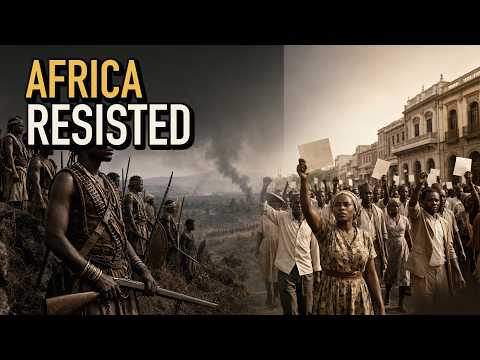
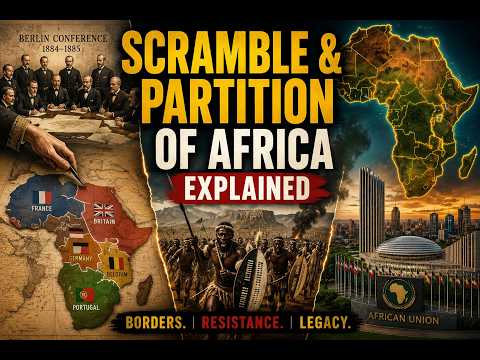
How Europe Systematically Dismantled Ancient African Self-Government to Impose Colonial Rule
How did Europe systematically dismantle African self-government and replace it with colonial rule? Africa was not an ungoverned continent waiting for Europe to create political order. Long before European colonization, African societies had developed kingdoms, emirates, city-states, councils, assemblies, courts, laws and administrative systems suited to their own histories and environments.
This documentary traces how European powers placed themselves above those existing political systems. Beginning with Britain’s capture of Benin City in 1897, it examines the quieter methods that often preceded invasion: treaties presented as friendship or protection, competing interpretations of sovereignty, European protectorates, chartered companies and alliances that exploited African political rivalries.
The story follows the Congo treaties collected for King Leopold II, Pierre Savorgnan de Brazza’s agreement with the Teke ruler Makoko Iloo I, the Berlin Conference and the disputed Treaty of Wuchale between Ethiopia and Italy. It examines how Britain, France, Germany, Portugal and Belgium transformed commercial access into territorial claims and foreign supervision.
When African governments defended their independence, Europe increasingly redefined sovereignty as hostility. The documentary follows the ultimatum imposed upon the Zulu king Cetshwayo, the exile of rulers including Prempeh I, Béhanzin and Ranavalona III, and the occupation and looting of African capitals and palaces. It also shows how decentralized societies—including many Igbo communities—were conquered and reorganized through appointed warrant chiefs.
Conquest was only the beginning. European powers then constructed colonial states above the political societies they had defeated. Colonial boundaries combined former kingdoms and divided communities. Direct and indirect rule subordinated African rulers and councils. European governments controlled law, taxation, land, labour, political succession and even the official classification of African identities.
The documentary concludes by examining the lasting consequences after independence. African sovereignty returned through states created under colonial rule, while many older kingdoms, chiefdoms, councils and customary authorities survived only within the constitutional limits of those modern states. From Buganda and Ghana’s chieftaincy institutions to the Asantehene at Kumasi, ancient political identities endured—even where their former sovereignty did not.
This is the story of how Europe did not bring government to Africa. It systematically placed colonial government above African political orders that already existed.
Chapters:
0:00 The Fall of Benin and the Threat to African Government
1:51 Africa’s Ancient Traditions of Self-Government
3:26 Kingdoms, Emirates, Councils and City-States
7:13 Europe Recognized African Political Authority
8:54 Treaties: The Quiet Invasion
10:34 King Leopold II and the Congo Precedent
12:50 The Berlin Conference Accelerates the Race
14:39 Protectorates Place Europe Above African Rulers
15:57 Menelik II Discovers the Treaty Trap
18:18 Chartered Companies Become Governments
20:29 Europe Exploits African Rivalries
23:04 African Sovereignty Redefined as Hostility
24:22 The British Ultimatum to the Zulu Kingdom
25:46 Rulers, Capitals and Political Symbols Targeted
27:42 Benin and the Destruction of Political Authority
29:18 Breaking Decentralized African Governments
32:16 The Colonial Order Takes Shape
33:53 Military Occupation Becomes a Colonial State
35:47 Europe Creates a New Political Map
38:42 Britain Amalgamates Nigeria
40:04 Direct and Indirect Colonial Rule
44:01 Colonial Control over African Law
48:04 Taxation Enters Everyday African Life
49:30 Land Loss and Labour Dependence
50:59 Colonial Governments Harden African Identities
54:41 Independence Within Colonial Borders
56:04 Uganda Abolishes Its Traditional Kingdoms
57:17 Kingdoms Return Without Sovereignty
59:30 Ghana’s Constitutional Balance
60:28 African Political Memory and the Asante