
Did Africans Sell Other Africans? The Wars, Raids, and African Systems That Fed the Slave Trade
Introduction
When discussing the transatlantic slave trade, attention often focuses on the ships that crossed the Atlantic and the European merchants who purchased enslaved people along the African coast. Yet by the time captives reached those ships, a much longer process had already unfolded. Before they were confined within coastal forts or loaded onto vessels bound for the Americas, they had first been captured, transported, exchanged, and absorbed into complex networks operating deep within the African interior. Understanding how captives entered those networks is essential because the Atlantic slave trade did not begin at the coast; it began through a variety of political, military, judicial, and economic processes that produced the human beings eventually sold into Atlantic commerce.
The methods through which captives were acquired varied considerably across regions and historical periods. Some were taken during wars fought between rival states. Others were seized through raids, kidnapping, judicial punishment, debt obligations, tribute systems, or political subordination. Many of these practices existed in Africa long before the emergence of the Atlantic slave trade, but the unprecedented demand generated by Atlantic markets transformed them in profound ways. This study examines those methods of acquisition, exploring how warfare, law, politics, and commerce became increasingly intertwined in the production of captives and how older institutions of dependency and punishment were gradually drawn into one of the largest forced migrations in human history.
1. War Captives and Military Expansion
The most significant source of captives for the Atlantic slave trade was warfare.[1] Across much of West and Central Africa, the capture of prisoners had long been a recognized consequence of armed conflict. Victorious states frequently incorporated captives into their societies as laborers, dependents, soldiers, or servants. However, as Atlantic demand expanded from the sixteenth century onward, war captives increasingly became commodities that could be exchanged for imported goods, particularly firearms, textiles, metal products, and luxury items.[2]
This development fundamentally altered the relationship between warfare and slavery. Conflicts that may once have been fought primarily for territorial expansion, political dominance, or tribute increasingly generated captives destined for sale beyond Africa.[3] In some regions, military campaigns became closely linked to the acquisition of exportable prisoners. The Kingdom of Dahomey, located in present-day Benin, provides one of the clearest examples. During the eighteenth and nineteenth centuries, Dahomey's military expeditions routinely produced large numbers of captives who were sold through coastal trading networks, contributing significantly to royal revenue and state power.[4]
A similar pattern emerged in the Asante Empire of present-day Ghana. Although Asante's economy rested upon multiple foundations, including gold production and regional commerce, military expansion generated substantial numbers of captives who could be incorporated into the empire or sold through Atlantic markets.[5] The same dynamic appeared within the Oyo Empire of present-day southwestern Nigeria and parts of Benin, where military campaigns against neighboring peoples supplied captives to commercial networks linked to the coast.[6]
In West Central Africa, particularly in present-day Angola, warfare became deeply intertwined with the slave trade. Joseph Miller's research demonstrates how military conflicts, shifting alliances, and political instability produced large numbers of captives who entered Portuguese-controlled trading systems along the Angolan coast.[7] As European demand grew, the profitability of captive exports intensified conflicts and encouraged further military activity, creating a cycle in which warfare and slave trading increasingly reinforced one another.[8]
Although warfare remained a traditional feature of many African societies, the Atlantic trade altered its consequences. The growing commercial value of captives transformed prisoners of war into one of the most sought-after commodities in Atlantic commerce, ensuring that military conflict became one of the principal engines driving the supply of enslaved people toward the coast.[9]
2. Raids, Kidnapping, and Frontier Violence
While warfare generated large numbers of captives, not all enslaved individuals entered the trade through formal military campaigns. Alongside organized warfare existed a second and often more unpredictable source of captives: raids, kidnapping, and frontier violence.[10]
Unlike wars conducted by established states, raids were typically smaller in scale and often targeted vulnerable communities located beyond the protection of strong political authorities. Frontier settlements, isolated villages, and politically fragmented regions proved especially susceptible to attack.[11] Armed groups could strike quickly, seize captives, and disappear before meaningful resistance could be organized.
In many regions, professional raiders emerged whose primary objective was not territorial conquest but the acquisition of human beings for sale.[12] Some operated independently, while others maintained relationships with merchants, local rulers, or military leaders who provided markets for the captives they obtained. The distinction between warfare and raiding therefore often became blurred, particularly in areas where Atlantic demand created strong incentives for the acquisition of prisoners.[13]
The consequences extended far beyond those directly captured. Fear of raids altered settlement patterns, disrupted agricultural production, and encouraged populations to abandon fertile lands in favor of more defensible locations.[14] Communities invested resources in fortifications, relocated to difficult terrain, or sought protection from stronger political authorities. In this way, the slave trade reshaped not only the lives of captives but also the social geography of entire regions.
The Bight of Biafra, encompassing parts of present-day southeastern Nigeria and Cameroon, provides numerous examples of how localized violence contributed to the supply of captives.[15] In this region, Aro merchant networks and their allies became particularly influential in channeling captives toward Atlantic markets. Through a combination of commercial influence, political alliances, and, at times, coercive practices associated with the Aro Confederacy, captives acquired through local conflicts and raids could be incorporated into wider trading systems. Merchant networks created opportunities for profit, while political fragmentation in some areas increased vulnerability to the predatory activity. Similar patterns appeared across portions of West Central Africa, where raiding became an important mechanism feeding captives into regional markets connected to Atlantic commerce.[16] In Angola and neighboring regions, Imbangala war bands became especially notorious for conducting raids and military campaigns that generated large numbers of captives, many of whom ultimately entered Portuguese-controlled slave-trading networks along the coast.
Consequently, the Atlantic slave trade depended not only upon major wars but also upon a broader climate of insecurity that enabled smaller-scale violence to generate a continuous supply of captives.
3. Judicial Enslavement and Punishment
Not all captives were acquired through violence on the battlefield or through raids. In many African societies, systems of law and justice also produced individuals who could enter slavery.[17] Long before the rise of the Atlantic trade, judicial enslavement functioned as a recognized punishment for certain offenses, particularly in societies where imprisonment was uncommon or nonexistent.[18]
Individuals convicted of crimes such as theft, adultery, debt default, witchcraft accusations, or political offenses could be sentenced to slavery as a form of punishment or restitution.[19] In some cases, the enslaved person remained within the society in which the offense occurred. In others, they could be transferred, exchanged, or sold.
As Atlantic demand increased, however, the commercial value of enslaved individuals created incentives for abuse. Authorities who possessed the power to define criminal behavior also gained access to a potentially lucrative source of revenue.[20] Historians have documented instances in which legal processes were manipulated or expanded to increase the supply of captives available for sale.[21]
The significance of judicial enslavement lies not simply in the number of captives it produced but in the way commercial incentives became intertwined with legal institutions. Practices originally designed to maintain social order could become mechanisms feeding individuals into Atlantic markets. In this respect, the slave trade extended its influence beyond warfare and commerce into the administration of justice itself.[22]
Orlando Patterson's concept of "social death" offers a useful framework for understanding this process.[23] Judicial enslavement often severed individuals from their kinship networks, political rights, and social identities, transforming them into outsiders whose labor and lives could be controlled by others. Once detached from their communities, such individuals became particularly vulnerable to incorporation into wider systems of slavery and export.[24]
4. Debt, Pawnship, and Social Vulnerability
While judicial enslavement drew individuals into slavery through the legal system, other people entered conditions of servitude through economic hardship and social dependency. Across many parts of Africa, systems of debt bondage and pawnship existed long before the rise of the Atlantic slave trade.[25] These arrangements were not originally designed to produce captives for export. Instead, they functioned as mechanisms through which debts could be secured, obligations fulfilled, and economic relationships maintained within communities.
Pawnship, which was particularly widespread in parts of West Africa, involved the temporary transfer of a person, often a family member as security against a debt.[26] In theory, the arrangement was intended to be temporary. Once the debt had been repaid, the individual serving as a pawn would return to their family. Unlike chattel slavery, pawnship did not necessarily involve permanent alienation or the loss of all social ties. The pawn remained connected to their kinship network and retained certain social protections.[27]
However, the expansion of Atlantic commerce increasingly placed these systems under strain. As the commercial value of human beings rose, distinctions that had once separated temporary dependency from slavery became more vulnerable to abuse.[28] Individuals pledged as pawns could be retained for longer periods, transferred to new owners, or in some circumstances sold into wider commercial networks. Economic crises, crop failures, warfare, and growing indebtedness further increased the vulnerability of families already struggling to survive.[29]
The relationship between debt and slavery became particularly significant because it expanded the pool of people susceptible to enslavement beyond prisoners of war and convicted criminals. Individuals could find themselves trapped by circumstances rather than military defeat or legal punishment. In this way, economic hardship became another pathway through which vulnerable populations entered systems of bondage increasingly connected to Atlantic markets.[30]
Although debt bondage and pawnship varied considerably across regions, their transformation under the pressures of Atlantic demand illustrates a broader pattern visible throughout the slave trade. Existing institutions were not simply replaced by new ones. Rather, older systems of dependency were reshaped and commercialized in ways that made human beings more vulnerable to export.[31]
5. Tribute, Political Subordination, and Captive Payments
Economic dependency was not the only mechanism through which people entered slavery. Political relationships between stronger and weaker societies also generated captives who could ultimately be drawn into Atlantic commerce.[32] Across many parts of Africa, powerful states exercised authority over subordinate communities through systems of tribute, taxation, and political dependency. These arrangements often required weaker groups to provide goods, labor, military assistance, or other forms of payment to dominant rulers.
In some cases, tribute included the delivery of captives.[33] Defeated communities might be required to surrender prisoners, while subordinate territories could be expected to provide human labor as part of their obligations to a stronger state. Such practices were not unique to Africa and existed in many premodern societies. However, the growth of the Atlantic slave trade increased the value of captives and consequently heightened the importance of human tribute within certain political systems.[34]
The Asante Empire offers one example of how political subordination could generate access to human resources.[35] Conquered territories were integrated into a wider imperial structure that required various forms of tribute and service. Although these obligations differed from one territory to another, captives formed part of the broader flow of labor and resources that sustained state power. Similar dynamics appeared in other expanding states, including Dahomey and Oyo, where military victories frequently created new pools of captives available for redistribution, incorporation, or sale.[36]
Political instability could also produce captives outside formal tribute systems. Dynastic disputes, succession struggles, and conflicts between rival factions often resulted in the displacement or enslavement of defeated groups.[37] Individuals associated with losing political factions could find themselves stripped of protection and absorbed into systems of captivity that ultimately connected to Atlantic markets.
The significance of tribute and political subordination lies in the way they reveal the close relationship between slavery and power. Captives were not merely products of violence or economic hardship. They also emerged from political hierarchies that enabled stronger groups to exercise authority over weaker populations. As Atlantic demand expanded, these existing power structures became increasingly entangled with the commercial export of human beings.[38]
6. Markets, Sorting, and Movement Toward the Coast
Regardless of how captives were acquired, whether through warfare, raids, judicial punishment, debt, or political subordination, most did not move directly from their place of capture to a European slave ship.[39] Instead, they entered a network of regional markets and commercial corridors that connected the African interior to the Atlantic coast.
These markets served several functions. They allowed merchants to purchase captives, enabled rulers and brokers to collect taxes and duties, and provided opportunities for captives to be redistributed across different regions.[40] Some individuals remained within Africa and were absorbed into local systems of servitude. Others were directed toward coastal markets where demand from European traders remained strongest.[41]
The journey itself could be long and arduous. Captives were frequently marched hundreds of kilometers across difficult terrain, passing through multiple hands before reaching the coast.[42] Along the way they might be exchanged several times, with each transaction increasing their commercial value. Merchants, brokers, transporters, and local authorities all extracted profits from this process, ensuring that a captive represented economic value long before arriving at an Atlantic port.[43]
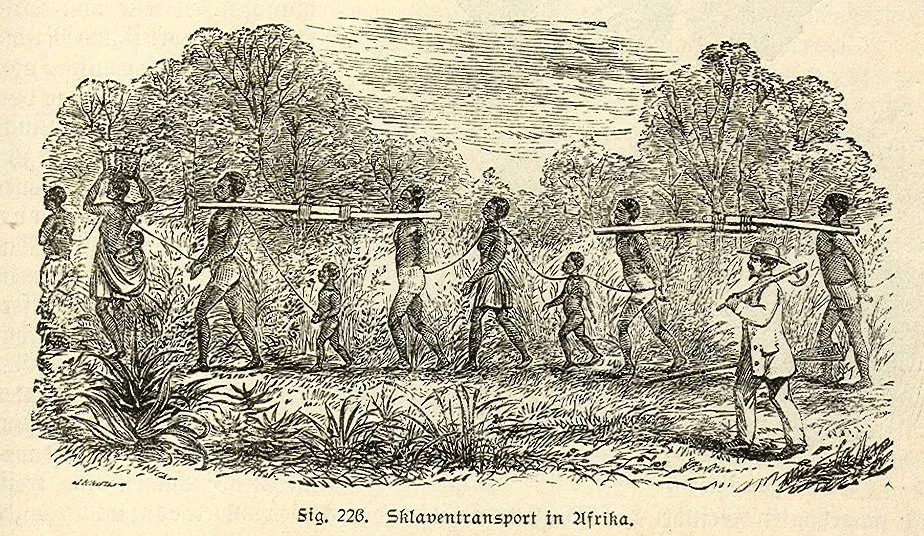
By the time captives reached major trading centers such as Elmina and Cape Coast in present-day Ghana, Whydah in present-day Benin, Bonny and Old Calabar in present-day Nigeria, or Luanda in present-day Angola, they had already passed through a sophisticated commercial system managed largely by African intermediaries.[44] Coastal brokers then negotiated the final sales that transferred captives from African-controlled networks into European hands.
This final stage is important because it reminds us that the Atlantic slave trade did not begin at the coast. The ships anchored offshore represented the end point of a much longer process that often started hundreds of kilometers inland. Captives entered that process through many different pathways, but all eventually converged within the commercial networks that linked the African interior to the Atlantic world.[45]
In Conclusion, the methods through which captives entered the Atlantic slave trade were as varied as the societies from which they came. Some were seized during wars fought between rival states. Others were taken through raids, kidnapping, judicial punishment, debt obligations, tribute systems, or political subordination. These mechanisms differed across regions and historical periods, yet they shared a common transformation under the pressures of Atlantic demand.[46]
What emerges from this examination is not a picture of a continent operating through a single system of enslavement, but of diverse institutions that were gradually drawn into an expanding commercial network. Existing practices of captivity, dependency, and punishment became increasingly connected to markets that placed unprecedented value on human beings. In doing so, they supplied the captives who moved through African-controlled networks toward the Atlantic coast and eventually across the ocean.
Understanding these methods is essential because it reveals that the slave trade was sustained not by one mechanism alone but by the convergence of warfare, politics, law, economics, and commerce. It also prepares us for the next question in this discussion: if African rulers, merchants, and intermediaries participated in the trade, to what extent did they do so willingly, and to what extent were they responding to pressures created by a rapidly expanding Atlantic world?
End Notes.
[1] Lovejoy, Transformations in Slavery, pp. 85–92.
[2] Thornton, Africa and Africans in the Making of the Atlantic World, pp. 98–101.
[3] Lovejoy, Transformations in Slavery, pp. 92–96.
[4] Robin Law, The Slave Coast of West Africa 1550–1750 (Oxford: Clarendon Press, 1991), pp. 68–76.
[5] Ivor Wilks, Asante in the Nineteenth Century (Cambridge: Cambridge University Press, 1975), pp. 180–185.
[6] Robin Law, The Oyo Empire c.1600–1836 (Oxford: Oxford University Press, 1977), pp. 144–151.
[7] Joseph C. Miller, Way of Death: Merchant Capitalism and the Angolan Slave Trade, 1730–1830 (Madison: University of Wisconsin Press, 1988), pp. 97–115.
[8] Miller, Way of Death, pp. 115–122.
[9] Thornton, Africa and Africans in the Making of the Atlantic World, pp. 101–104.
[10] Lovejoy, Transformations in Slavery, pp. 92–98.
[11] Miller, Way of Death, pp. 123–130.
[12] Thornton, Africa and Africans in the Making of the Atlantic World, pp. 104–106.
[13] Lovejoy, Transformations in Slavery, pp. 96–99.
[14] Walter Rodney, How Europe Underdeveloped Africa (London: Bogle-L'Ouverture Publications, 1972), pp. 112–118.
[15] G. Ugo Nwokeji, The Slave Trade and Culture in the Bight of Biafra (Cambridge: Cambridge University Press, 2010), pp. 120–128.
[16] Miller, Way of Death, pp. 130–138.
[17] Lovejoy, Transformations in Slavery, pp. 25–33.
[18] Lovejoy, Transformations in Slavery, pp. 30–35.
[19] Lovejoy, Transformations in Slavery, pp. 33–38.
[20] Thornton, Africa and Africans in the Making of the Atlantic World, pp. 106–108.
[21] Lovejoy, Transformations in Slavery, pp. 35–40.
[22] Thornton, Africa and Africans in the Making of the Atlantic World, pp. 107–109.
[23] Orlando Patterson, Slavery and Social Death: A Comparative Study (Cambridge, MA: Harvard University Press, 1982), pp. 5–13.
[24] Patterson, Slavery and Social Death, pp. 38–45.
[25] Paul E. Lovejoy, Transformations in Slavery: A History of Slavery in Africa, 3rd ed. (Cambridge: Cambridge University Press, 2012), pp. 38–46.
[26] Lovejoy, Transformations in Slavery, pp. 41–45.
[27] Lovejoy, Transformations in Slavery, pp. 42–46.
[28] Lovejoy, Transformations in Slavery, pp. 95–101.
[29] Jane I. Guyer, Marginal Gains: Monetary Transactions in Atlantic Africa (Chicago: University of Chicago Press, 2004), pp. 52–58.
[30] Lovejoy, Transformations in Slavery, pp. 46–50.
[31] Thornton, Africa and Africans in the Making of the Atlantic World, 1400–1800, 2nd ed. (Cambridge: Cambridge University Press, 1998), pp. 104–108.
[32] Thornton, Africa and Africans in the Making of the Atlantic World, pp. 90–97.
[33] Lovejoy, Transformations in Slavery, pp. 86–92.
[34] Thornton, Africa and Africans in the Making of the Atlantic World, pp. 98–101.
[35] Ivor Wilks, Asante in the Nineteenth Century (Cambridge: Cambridge University Press, 1975), pp. 180–185.
[36] Robin Law, The Slave Coast of West Africa 1550–1750 (Oxford: Clarendon Press, 1991), pp. 68–76; Robin Law, The Oyo Empire c.1600–1836 (Oxford: Oxford University Press, 1977), pp. 144–151.
[37] Joseph C. Miller, Way of Death: Merchant Capitalism and the Angolan Slave Trade, 1730–1830 (Madison: University of Wisconsin Press, 1988), pp. 115–130.
[38] Thornton, Africa and Africans in the Making of the Atlantic World, pp. 92–100.
[39] Lovejoy, Transformations in Slavery, pp. 64–69.
[40] G. Ugo Nwokeji, The Slave Trade and Culture in the Bight of Biafra (Cambridge: Cambridge University Press, 2010), pp. 112–120.
[41] Lovejoy, Transformations in Slavery, pp. 67–71.
[42] Miller, Way of Death, pp. 97–110.
[43] Thornton, Africa and Africans in the Making of the Atlantic World, pp. 84–90.
[44] Thornton, Africa and Africans in the Making of the Atlantic World, pp. 74–84; Nwokeji, The Slave Trade and Culture in the Bight of Biafra, pp. 120–132.
[45] Lovejoy, Transformations in Slavery, pp. 64–75.
[46] Lovejoy, Transformations in Slavery, pp. 85–105.
Bibliography:
Austin, Gareth. Labour, Land, and Capital in Ghana: From Slavery to Free Labour in Asante, 1807–1956. Rochester: University of Rochester Press, 2005.
Guyer, Jane I. Marginal Gains: Monetary Transactions in Atlantic Africa. Chicago: University of Chicago Press, 2004.
Law, Robin. The Oyo Empire c.1600–1836: A West African Imperialism in the Era of the Atlantic Slave Trade. Oxford: Oxford University Press, 1977.
Law, Robin. The Slave Coast of West Africa 1550–1750: The Impact of the Atlantic Slave Trade on an African Society. Oxford: Clarendon Press, 1991.
Lovejoy, Paul E. Transformations in Slavery: A History of Slavery in Africa. 3rd ed. Cambridge: Cambridge University Press, 2012.
Miller, Joseph C. Way of Death: Merchant Capitalism and the Angolan Slave Trade, 1730–1830. Madison: University of Wisconsin Press, 1988.
Nwokeji, G. Ugo. The Slave Trade and Culture in the Bight of Biafra: An African Society in the Atlantic World. Cambridge: Cambridge University Press, 2010.
Patterson, Orlando. Slavery and Social Death: A Comparative Study. Cambridge, MA: Harvard University Press, 1982.
Rodney, Walter. How Europe Underdeveloped Africa. London: Bogle-L'Ouverture Publications, 1972.
Thornton, John K. Africa and Africans in the Making of the Atlantic World, 1400–1800. 2nd ed. Cambridge: Cambridge University Press, 1998.
Wilks, Ivor. Asante in the Nineteenth Century: The Structure and Evolution of a Political Order. Cambridge: Cambridge University Press, 1975.
Research by: Emmer Atwiine
Paper by: Ezron Kaijuka
