
How European Colonial Powers Conquered and Controlled Africa Through Force, Treaties and Colonial Rule
Introduction
Following the Scramble for Africa and the agreements reached at the Berlin Conference, European colonial powers now faced the enormous challenge of transforming fragile territorial claims into functioning colonial states across a vast and unfamiliar continent. Military occupation, administrative control, taxation, labor extraction, and political domination all had to be imposed upon societies that had possessed their own rulers, political institutions and commercial systems for centuries. The conquest of Africa therefore became not merely a diplomatic project of partition, but a prolonged struggle to establish and maintain colonial authority through force, coercion, treaties, alliances, and administrative experimentation.
However, European colonial rule did not emerge through a single uniform system. Different imperial powers developed different methods of conquest and governance depending on their political philosophies, economic objectives, administrative capacities, and the forms of African resistance they encountered. Some colonial powers governed indirectly through African rulers and institutions, while others attempted to centralize authority under direct European administration. In many regions, colonial expansion relied upon military violence, unequal treaties, forced labor systems, racial hierarchies, and technological superiority to secure control over African societies. These systems would not only shape the colonial period itself, but would also leave lasting political, economic, and social legacies across modern Africa.
1. Colonial Systems of Rule and Administration
European colonial powers developed different systems of administration in order to consolidate authority across their newly conquered territories. These systems varied according to each empire’s political philosophy, administrative capacity, economic objectives, and the forms of African resistance encountered during conquest.[1] While some colonial powers governed indirectly through African rulers and institutions, others attempted to centralize authority under direct European administration.[2] Through these systems, colonial governments reorganized political authority, taxation, labor relations, education, and social structures across much of the continent.[3]
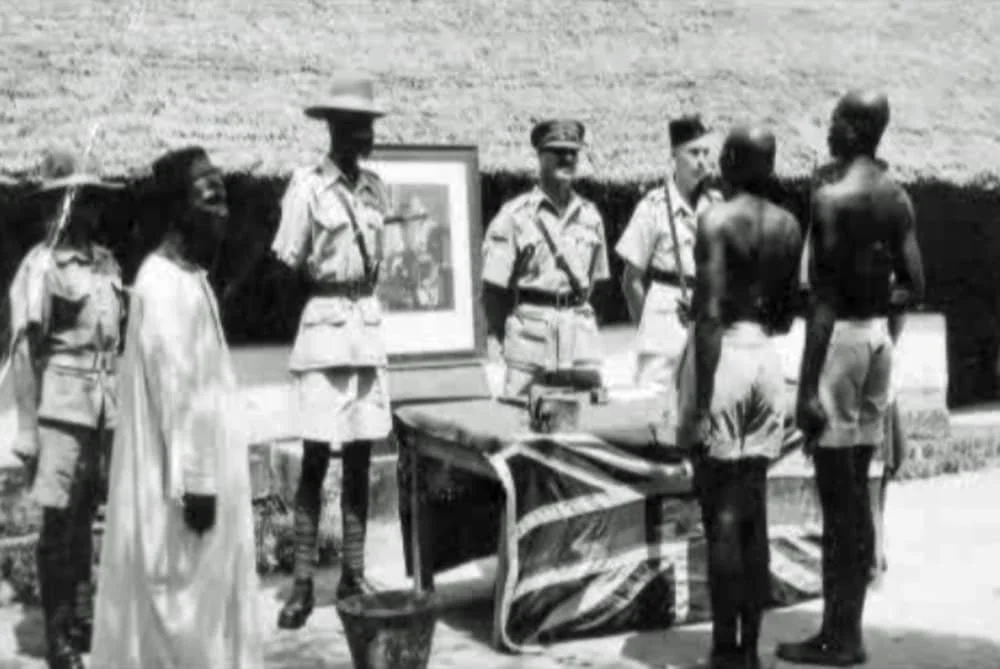
A photo of a British colonial officer with a local chief. Image Source unknown.
1.1 British Indirect Rule
Among the various colonial systems that emerged across Africa, the British increasingly turned toward indirect rule as one of their principal methods of administration, particularly in territories where centralized political institutions already existed.[4] Rather than dismantling local authority structures completely, British administrators often governed through selected African rulers, chiefs, emirs, and existing institutions, transforming them into instruments of colonial administration.[5] This system became especially associated with Northern Nigeria under Frederick Lugard, where colonial authorities governed through emirate structures while preserving the outward appearance of indigenous political continuity.
Under indirect rule, African chiefs and local authorities were expected to collect taxes, maintain order, recruit labor, enforce colonial regulations, settle disputes, and implement directives issued by colonial officials.[6] This arrangement reduced the number of European administrators required to govern vast territories while simultaneously helping colonial governments penetrate rural societies more effectively.[7]
However, indirect rule significantly transformed African political systems in practice. Colonial administrations often elevated selected chiefs above rival authorities, expanded the powers of compliant rulers, or even created entirely new “traditional” authorities where centralized structures had not previously existed.[8]
These transformations altered patterns of authority and social organization across many African societies. In several regions, colonial administrations strengthened selected conservative ruling elites, these groups were often viewed as more useful for maintaining colonial order and enforcing imperial directives.[9] As colonial governments concentrated administrative power in the hands of chiefs and compliant local authorities, alternative political institutions and decentralized systems of consultation gradually weakened across many communities. In several societies, younger educated Africans, rival political factions, and women who had previously exercised influence within local governance structures increasingly found themselves excluded from colonial systems of authority.[10] These changes reshaped political participation and social relations within African societies while simultaneously deepening dependence upon colonial administrative structures for power and legitimacy.[11]
As indirect rule expanded across larger colonial territories, British administrations increasingly required clearer systems of population management, taxation, labor recruitment, and local administration. Colonial officials therefore began classifying populations into more rigid ethnic and “tribal” administrative categories in order to simplify governance and strengthen political control over diverse societies.[12]
In many regions, these classifications hardened identities that had previously remained more fluid, while also encouraging competition over political representation, land access, political representation, colonial employment, administrative recognition, and privileged access to colonial patronage within administrative systems organized around ethnic divisions.[13] These colonial classifications would later contribute to political tensions, ethnic competition, and struggles over state power in several postcolonial African societies because identities that had once remained flexible increasingly became tied to administrative privilege, territorial boundaries, and access to colonial resources.[14]
1.2 French Assimilation and Direct Rule
While the British increasingly relied upon indirect rule and ethnic administrative structures to govern their colonies, French colonial authorities pursued a markedly different approach centered upon direct administration and the policy of assimilation.[15] Unlike the British model, which frequently relied upon preserving selected indigenous authorities, French colonial policy aimed to extend French political, legal, educational, and cultural systems directly into African societies.[16] Colonial administrators sought to create subjects who would adopt the French language, French political values, and French administrative structures while weakening older political institutions and local systems of authority.
This model was highly centralized. Decisions were often directed from Paris through colonial administrative centers such as Dakar, while French-appointed officials exercised direct authority over African territories.[17] Schools became important instruments of colonial transformation with French education systems promoting French history, language, citizenship ideals, and cultural norms while discouraging indigenous political and cultural systems.[18]
Although the rhetoric of assimilation suggested that Africans could theoretically become equal French citizens, access to full citizenship remained highly restricted in practice.[19] Only small educated elites, particularly within the Four Communes of Senegal, gained limited political rights and representation.[20] For most Africans, French colonial rule remained authoritarian and coercive despite the language of civilization and equality.
The policy nevertheless transformed African social and cultural life in important ways; it reshaped educational systems, introduced new legal codes, altered patterns of political participation, and encouraged the emergence of Western-educated African elites who would later play important roles in anti-colonial movements and postcolonial governance.[21]
1.3 Portuguese Forced Labor and Racial Hierarchies
As for the Portuguese colonial rule in Africa, it evolved around coercive labor systems and rigid racial hierarchies designed to secure economic extraction and imperial control across territories such as Angola and Mozambique. Although Portugal had maintained some of the oldest European footholds along the African coast for centuries, its effective inland authority remained limited for much of the nineteenth century.[22] Following the Scramble for Africa, however, Portugal intensified military occupation and administrative expansion in order to defend its colonial claims against rival European powers.
As the Portuguese obtained more colonies in the interior, their rule became heavily dependent upon coercive labor systems designed to support plantation agriculture, infrastructure construction, and resource extraction.[23] This led to African populations being subjected to compulsory labor regimes, forced cultivation policies, taxation, and strict racial hierarchies that placed Europeans and assimilated elites above the majority African population.[24]
These systems disrupted agricultural production, migration patterns, family structures, and local economies across Portuguese territories.[25] Forced labor frequently pushed African communities into mining, plantation work, railway construction, and colonial infrastructure projects under harsh and exploitative conditions.[26]
1.4 German Military Rule and Colonial Violence
While Portuguese colonial rule relied heavily upon coercive labor systems and racial hierarchy to maintain imperial control, German colonial expansion became increasingly associated with direct military domination and extreme colonial violence. During the Scramble for Africa, Germany acquired territories across present-day Namibia, Tanzania, Cameroon, and Togo, where colonial authorities moved aggressively to establish political control over African populations through military force, settler expansion, and racial domination.[27]
Nowhere did this become more visible than in German South-West Africa, where tensions steadily intensified as German settlers expanded onto African lands while colonial authorities imposed stricter systems of racial control and economic dispossession. Resistance from the Herero and Nama peoples eventually erupted into open rebellion against land seizure, settler encroachment, and colonial rule.[28] Germany responded with overwhelming military force. German campaigns drove large numbers of Herero and Nama into the desert, where many died from thirst, starvation, disease, and extermination policies designed to destroy resistance permanently.[29] Survivors were frequently confined in concentration camps and subjected to forced labor under brutal colonial conditions.[30]
The violence witnessed in German South-West Africa reflected broader patterns increasingly emerging across sections of colonial Africa, where imperial authority was often sustained through land seizure, racial hierarchy, punitive expeditions, forced labor, and the violent suppression of African resistance whenever colonial rule faced opposition.[31]
1.5 Belgian Rule in the Congo Free State
Among the most brutal colonial systems established in Africa was the Congo Free State under King Leopold II of Belgium.[32] Unlike most colonies administered directly by European states, the Congo Free State functioned initially as Leopold’s personal possession following international recognition at the Berlin Conference.
The colonial economy of the Congo became heavily focused upon the extraction of wild rubber and ivory during the late nineteenth-century global rubber boom.[33] To maximize production, colonial authorities imposed forced labor systems upon Congolese communities while using military violence and terror to enforce rubber quotas.[34]
Villages that failed to meet production demands faced executions, hostage-taking, mutilations, village destruction, and collective punishment.[35] Colonial agents and concessionary companies frequently cut off the hands of victims as proof that ammunition had not been wasted and that punishments had been carried out.[36] These atrocities produced international outrage and eventually forced the Belgian government to assume formal control over the Congo in 1908.
The system nevertheless left devastating demographic, economic, and social consequences across the Congo Basin. Large populations were displaced, agricultural systems were disrupted, violence became deeply embedded within colonial administration, and local societies experienced prolonged destruction under extractive colonial rule.[37]
2. Methods of Conquest: Treaties, Force, and Technological Superiority
Although European colonial powers developed different administrative systems after conquest, the initial expansion into African territories often relied upon remarkably similar methods. Before colonial governments could establish systems such as indirect rule or assimilation, European powers first had to secure territorial control through treaties, military force, technological superiority, missionary activity, and strategic alliances with selected African groups.[38]
Across the continent, European agents, explorers, and colonial representatives signed hundreds of treaties with African rulers during the Scramble for Africa.[39] Many of these agreements later became central instruments through which European governments justified territorial claims before rival imperial powers. Yet these treaties were frequently unequal and deeply misunderstood because European legal concepts of permanent territorial sovereignty often differed significantly from African diplomatic traditions and understandings of political authority.[40] In numerous cases, treaties were signed under military pressure, through manipulation, or under conditions in which African rulers could not fully understand the long-term territorial implications being imposed upon them.[41]
Where diplomacy and treaties failed to secure compliance, colonial conquest increasingly shifted toward direct military violence. European armies possessed significant technological advantages, particularly through the Maxim gun and modern repeating rifles, which allowed relatively small European-led forces to defeat much larger African armies during major campaigns of conquest.[42] Medical developments such as quinine treatment for malaria also strengthened European expansion by improving survival rates for soldiers, administrators, and explorers operating in tropical regions long feared by Europeans.[43]
Together, these methods enabled European powers to impose colonial rule across vast territories within a relatively short period of time. Yet conquest remained deeply contested across the continent. African societies repeatedly resisted foreign occupation, land seizure, forced labor, taxation, and political domination through uprisings, wars, diplomatic resistance, and prolonged anti-colonial struggles that would continue throughout much of the colonial period.
Although European colonial powers developed different systems of conquest and administration across Africa, most colonial regimes ultimately relied upon combinations of coercion, military violence, unequal treaties, labor exploitation, racial hierarchy, and administrative restructuring to establish and maintain imperial control over African societies.[44] Through systems such as British indirect rule, French assimilation, Portuguese forced labor, German military domination, and Belgian terror in the Congo, colonial administrations transformed political authority, labor relations, economic systems, and social organization across much of the continent.
Yet colonial conquest was never fully secure or uncontested. African societies resisted colonial occupation through war, rebellion, diplomacy, and prolonged political struggle throughout the colonial period. The systems created during conquest would outlive colonialism itself, continuing to shape political authority, ethnic relations, labor systems, and governance across modern Africa long after the colonial empires had disappeared.[45]
End Notes:
[1] Crawford Young, The African Colonial State in Comparative Perspective (New Haven: Yale University Press, 1994), 98–105.
[2] Martin Meredith, The Fortunes of Africa: A 5,000-Year History of Wealth, Greed, and Endeavour (New York: PublicAffairs, 2014), 438–445.
[3] Mahmood Mamdani, Citizen and Subject: Contemporary Africa and the Legacy of Late Colonialism (Princeton: Princeton University Press, 1996), 16–28.
[4] Frederick Lugard, The Dual Mandate in British Tropical Africa (Edinburgh: William Blackwood and Sons, 1922), 203–209.
[5] A.H.M. Kirk-Greene, Indirect Rule: The Nigerian Experience (London: Cass, 1965), 22–27.
[6] Mahmood Mamdani, Citizen and Subject: Contemporary Africa and the Legacy of Late Colonialism (Princeton: Princeton University Press, 1996), 37–40.
[7] Toyin Falola, Colonialism and Violence in Nigeria (Bloomington: Indiana University Press, 2009), 15–20.
[8] Terence Ranger, The Invention of Tradition in Colonial Africa (Cambridge: Cambridge University Press, 1983), 211–218.
[9] Mahmood Mamdani, Citizen and Subject: Contemporary Africa and the Legacy of Late Colonialism (Princeton: Princeton University Press, 1996), 52–61.
[10] Crawford Young, The African Colonial State in Comparative Perspective (New Haven: Yale University Press, 1994), 267–271.
[11] Crawford Young, The African Colonial State in Comparative Perspective (New Haven: Yale University Press, 1994), 271–279.
[12] Mahmood Mamdani, Citizen and Subject: Contemporary Africa and the Legacy of Late Colonialism (Princeton: Princeton University Press, 1996), 72–78.
[13] Terence Ranger, The Invention of Tradition in Colonial Africa (Cambridge: Cambridge University Press, 1983), 237–244.
[14] Mahmood Mamdani, Citizen and Subject: Contemporary Africa and the Legacy of Late Colonialism (Princeton: Princeton University Press, 1996), 177–185.
[15] Raymond F. Betts, Assimilation and Association in French Colonial Theory, 1890–1914 (New York: Columbia University Press, 1961), 89–95.
[16] Alice Conklin, A Mission to Civilize: The Republican Idea of Empire in France and West Africa, 1895–1930 (Stanford: Stanford University Press, 1997), 54–60.
[17] Martin Shipway, Decolonization and Its Impact: A Comparative Approach to the End of the Colonial Empires (Oxford: Blackwell Publishing, 2008), 18–22.
[18] Alice Conklin, A Mission to Civilize: The Republican Idea of Empire in France and West Africa, 1895–1930 (Stanford: Stanford University Press, 1997), 84–90.
[19] Raymond F. Betts, Assimilation and Association in French Colonial Theory, 1890–1914 (New York: Columbia University Press, 1961), 102–106.
[20] Martin Meredith, The Fortunes of Africa: A 5,000-Year History of Wealth, Greed, and Endeavour (New York: PublicAffairs, 2014), 452–455.
[21] Frederick Cooper, Africa Since 1940: The Past of the Present (Cambridge: Cambridge University Press, 2002), 21–27.
[22] Malyn Newitt, A History of Portuguese Overseas Expansion, 1400–1668 (London: Routledge, 2005), 311–318.
[23] Allen F. Isaacman and Barbara Isaacman, Mozambique: From Colonialism to Revolution, 1900–1982 (Boulder: Westview Press, 1983), 14–19.
[24] Basil Davidson, Modern Africa: A Social and Political History (London: Longman, 1994), 112–116.
[25] Allen F. Isaacman and Barbara Isaacman, Mozambique: From Colonialism to Revolution, 1900–1982 (Boulder: Westview Press, 1983), 28–33.
[26] Walter Rodney, How Europe Underdeveloped Africa (London: Bogle-L’Ouverture Publications, 1972), 205–214.
[27] Sebastian Conrad, German Colonialism: A Short History (Cambridge: Cambridge University Press, 2012), 67–73.
[28] Jeremy Sarkin, Germany’s Genocide of the Herero: Kaiser Wilhelm II, His General, His Settlers, His Soldiers (Cape Town: UCT Press, 2011), 102–109.
[29] Jürgen Zimmerer and Joachim Zeller, eds., Genocide in German South-West Africa: The Colonial War of 1904–1908 and Its Aftermath (Monmouth: Merlin Press, 2008), 45–53.
[30] David Olusoga and Casper W. Erichsen, The Kaiser's Holocaust: Germany's Forgotten Genocide and the Colonial Roots of Nazism (London: Faber & Faber, 2010), 85–96.
[31] Mahmood Mamdani, Citizen and Subject: Contemporary Africa and the Legacy of Late Colonialism (Princeton: Princeton University Press, 1996), 96–101.
[32] Adam Hochschild, King Leopold’s Ghost: A Story of Greed, Terror, and Heroism in Colonial Africa (Boston: Houghton Mifflin, 1998), 115–121.
[33] Martin Meredith, The Fortunes of Africa: A 5,000-Year History of Wealth, Greed, and Endeavour (New York: PublicAffairs, 2014), 461–466.
[34] Roger Casement, The Casement Report (London: British Parliamentary Papers, 1904), 12–18.
[35] Adam Hochschild, King Leopold’s Ghost: A Story of Greed, Terror, and Heroism in Colonial Africa (Boston: Houghton Mifflin, 1998), 225–233.
[36] Roger Casement, The Casement Report (London: British Parliamentary Papers, 1904), 15–17
[37] Georges Nzongola-Ntalaja, The Congo from Leopold to Kabila: A People’s History (London: Zed Books, 2002), 21–29.
[38] Thomas Pakenham, The Scramble for Africa: The White Man’s Conquest of the Dark Continent from 1876 to 1912 (New York: Random House, 1991), 310–318.
[39] Chinweizu, The West and the Rest of Us (New York: Vintage Books, 1975), 110–114.
[40] A. Adu Boahen, African Perspectives on Colonialism (Baltimore: Johns Hopkins University Press, 1987), 52–55.
[41] Thomas Pakenham, The Scramble for Africa: The White Man’s Conquest of the Dark Continent from 1876 to 1912 (New York: Random House, 1991), 319–325.
[42] Daniel R. Headrick, The Tools of Empire: Technology and European Imperialism in the Nineteenth Century (Oxford: Oxford University Press, 1981), 97–104.
[43] Philip D. Curtin, Disease and Empire: The Health of European Troops in the Conquest of Africa (Cambridge: Cambridge University Press, 1998), 67–73.
[44] Martin Meredith, The Fortunes of Africa: A 5,000-Year History of Wealth, Greed, and Endeavour (New York: PublicAffairs, 2014), 438–445.
[45] Mahmood Mamdani, Citizen and Subject: Contemporary Africa and the Legacy of Late Colonialism (Princeton: Princeton University Press, 1996), 16–28, 177–185.
Bibliography:
Adu Boahen, A. African Perspectives on Colonialism. Baltimore: Johns Hopkins University Press, 1987.
Betts, Raymond F. Assimilation and Association in French Colonial Theory, 1890–1914. New York: Columbia University Press, 1961.
Casement, Roger. The Casement Report. London: British Parliamentary Papers, 1904.
Chinweizu. The West and the Rest of Us. New York: Vintage Books, 1975.
Conklin, Alice. A Mission to Civilize: The Republican Idea of Empire in France and West Africa, 1895–1930. Stanford: Stanford University Press, 1997.
Conrad, Sebastian. German Colonialism: A Short History. Cambridge: Cambridge University Press, 2012.
Cooper, Frederick. Africa Since 1940: The Past of the Present. Cambridge: Cambridge University Press, 2002.
Curtin, Philip D. Disease and Empire: The Health of European Troops in the Conquest of Africa. Cambridge: Cambridge University Press, 1998.
Davidson, Basil. Modern Africa: A Social and Political History. London: Longman, 1994.
Falola, Toyin. Colonialism and Violence in Nigeria. Bloomington: Indiana University Press, 2009.
Gewald, Jan-Bart. Herero Heroes: A Socio-Political History of the Herero of Namibia, 1890–1923. Oxford: James Currey, 1999.
Headrick, Daniel R. The Tools of Empire: Technology and European Imperialism in the Nineteenth Century. Oxford: Oxford University Press, 1981.
Hochschild, Adam. King Leopold’s Ghost: A Story of Greed, Terror, and Heroism in Colonial Africa. Boston: Houghton Mifflin, 1998.
Isaacman, Allen F., and Barbara Isaacman. Mozambique: From Colonialism to Revolution, 1900–1982. Boulder: Westview Press, 1983.
Kirk-Greene, A.H.M. Indirect Rule: The Nigerian Experience. London: Cass, 1965.
Lugard, Frederick. The Dual Mandate in British Tropical Africa. Edinburgh: William Blackwood and Sons, 1922.
Mamdani, Mahmood. Citizen and Subject: Contemporary Africa and the Legacy of Late Colonialism. Princeton: Princeton University Press, 1996.
Meredith, Martin. The Fortunes of Africa: A 5,000-Year History of Wealth, Greed, and Endeavour. New York: PublicAffairs, 2014.
Newitt, Malyn. A History of Portuguese Overseas Expansion, 1400–1668. London: Routledge, 2005.
Nzongola-Ntalaja, Georges. The Congo from Leopold to Kabila: A People’s History. London: Zed Books, 2002.
Olusoga, David, and Casper W. Erichsen. The Kaiser's Holocaust: Germany's Forgotten Genocide and the Colonial Roots of Nazism. London: Faber & Faber, 2010.
Pakenham, Thomas. The Scramble for Africa: The White Man’s Conquest of the Dark Continent from 1876 to 1912. New York: Random House, 1991.
Ranger, Terence. The Invention of Tradition in Colonial Africa. Cambridge: Cambridge University Press, 1983.
Rodney, Walter. How Europe Underdeveloped Africa. London: Bogle-L’Ouverture Publications, 1972.
Sarkin, Jeremy. Germany’s Genocide of the Herero: Kaiser Wilhelm II, His General, His Settlers, His Soldiers. Cape Town: UCT Press, 2011.
Shipway, Martin. Decolonization and Its Impact: A Comparative Approach to the End of the Colonial Empires. Oxford: Blackwell Publishing, 2008.
Wesseling, H.L. Divide and Rule: The Partition of Africa, 1880–1914. Westport, CT: Praeger, 1996.
Young, Crawford. The African Colonial State in Comparative Perspective. New Haven: Yale University Press, 1994.
Zimmerer, Jürgen, and Joachim Zeller, eds. Genocide in German South-West Africa: The Colonial War of 1904–1908 and Its Aftermath. Monmouth: Merlin Press, 2008.
Research by: Emmer Atwiine
Paper written by: Ezron Kaijuka.
